
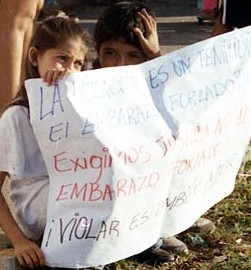
Code in defense of children makes public the faces of sexual violators
William Delgado and ALC/Gospel Noticias, BOGOTA, Colombia, May 10, 2007
With the entering into effect this week of the Infants and Adolescents Code, also entering Taxi Heathrow Airport into effect is Agreement 272, which seeks to punish sexual violations against minors resident in Colombia’s capital city of Bogotá, and to prevent that such aggressions go unpunished, according to Elvira Forero, Director of the Colombian Institute for Family Welfare (ICBF in Spanish).
The agreement sanctioned by the plenary of the Bogotá City Council, orders that the names and photographs of the sexual violators be publicly exhibited. A spokesperson for the municipality has stated that, “With the sanctioning of this measure the violators will be made known on public services bills, on 20 walls, 40 billboards and by means of hundreds of flyers that will be distributed throughout the city.”
In addition to defending the moral integrity of the minors, the new Infants and Adolescents Code also seeks to protect children and youth from economic exploitation, the consumption of alcoholic beverages, tobacco and psycho active substances, as well as from kidnapping, being displaced and the transmitting of HIV/AIDS and sexually transmitted infections.
Among other rights, the following standout:
-They cannot be recruited or utilized by illegal armed groups.
-They cannot be detained or deprived of their freedom, except for what is stipulated by the Code.
-They have the right to have a family and to not be separated from it.
-They can only be separated from their family when the family is unable to guarantee the minimal conditions necessary for them to be able to exercise their rights.
-They have the right to the custody and personal care on the part of their parents who live with them, and that of their legal representatives.
-The right to food, housing, clothing, medical attention, recreation, education and instruction.
-The right to have an identity, a name, nationality and filiations as legally established.
-The right to proper health care, education, integral development, recreation and participation in cultural activities and the arts.
-The right to association and meeting, to privacy and information.
 Home
 Top
 Comment this article