
Devotion and abundant grace in the V Assembly of CLAI
Carolina Brito and ALC/CLAI, BUENOS AIRES, Argentina, February 22, 2007
The V Assembly of the Latin American Council of Churches continues its work. Without a Taxi Heathrow Airport doubt, the discussion of the thematic axis presented by each of the five regions of the organization during their different moments: the plenary sessions, the theological forums and coffee gatherings, the work roundtables, the exhibits, presentations and workshops that take up the work that is proper of an event of this size, has been organized. Yet it is the morning time of reflection, praise, gratefulness and intercession to God that makes clear the expression of ecumenical unity that CLAI pursues as its reason for being.
Each morning the CLAI regions prepare the devotionals in the tent set up on the playing field of the Ward School. In that bright space, an enormous cross made of glass of different colors rises above the table filled with fruits of the earth and offerings of labor. The vitro fused cross was forged by hands of marginalized children who belong to the “Kneading Life” Workshop of the Methodist Church of Ing. Budge, in Buenos Aires.
In that tent on Tuesday, February 20, Mexican theologian Elsa Tamez led those present through a singular look at the passage in Luke 8:41-56, that tells of the situation in which an ill woman touches on her own initiative Jesus’ robe and is healed. With regard to the story, Tamez said that the flow of illness that this woman carried ends by being the opportunity for the grace of God to flow.
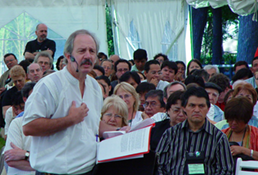
Particularly original was the reflection shared by Pastor Néstor Miguez of the Argentine Methodist Church, when he proposed to those present the dynamic of personifying the story in Luke 18:18-30, as understood by its characters. In this case, a chief Pharisee asks Jesus about how one can get into the kingdom. Then talking to the audience, this public functionary – acted by Miguez himself – demands: “Why did I have to be left outside of grace? Is it because you all did what Jesus asked me to do.”
The moment ended with an emotion filled intercession telling of the situations of marginalization, violence and death in the Meso American region, that raised the song of 700 voices in the cry: “Christ Jesus, be in solidarity not with the oppressing class that squeezes dry and devours the community, but with the oppressed, with my people thirsting for peace.”
 Home
 Top
 Comment this article