
Ecumenical bishops analyse Christian fundamentalisms
Carlos Ramos, QUITO, Ecuador, January 24, 2007
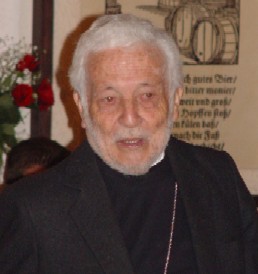
Recalling the gathering of Catholic bishops and Evangelical pastors that took place some twenty years Taxi Heathrow Airport ago in Cuenca when he was serving as bishop of that diocese, Bishop Luna Tobar pointed out that Christian unity faces a serious obstacle, that of fundamentalism.
There are true fundamentalisms that have their reasons, such as historical and cultural considerations. But there are also false fundamentalisms because of human capriciousness, matters of feeling, racial, ethnic and economic discrimination. The first are understandable and need time to be overcome. The second are the more dangerous and damaging because they are found in the feelings of the person who practices them, without any rational and logical basis.
"During my life in the priesthood I have had the opportunity to work on behalf of people in their struggle to overcome their difficulties, and for the cause of ecumenism understood as the fraternal relationship between human beings, tolerance and respect for the way of being and ideas of others,” Luna Tobar added.
In turn, Bishop Federico Pagura referred to the Protestant religious fundamentalism, as being nothing else but the affirmation of a couple of statements of identity by Evangelicals in the face of the onslaught of modernism, as Pixley would say. Some of these truths have to do with the inerrancy of the Bible, the virgin birth of Jesus, the vicarious sacrifice of Christ on the cross of Calgary, the resurrection of our Lord Jesus Christ, and his second coming.
The Argentine bishop remembered various aspects of his life, his theological studies and encounter with fundamentalism, because of which he was to choose the path of ecumenism. He recalled his having been bishop in Costa Rica and Panama, his work in the Latin American Council of Churches (CLAI) and the World Council of Churches (WCC).
“Public fundamentalism is dangerous and lends itself to having religious elements mixed in to it, as the North American pastor Pat Robertson has done on various occasions when speaking against Hugo Chávez, President of Venezuela. The fundamentalism in the United States during these last 25 years has given rise to a culture of terror,” Pagura affirmed.
Pagura finished his intervention by reading a letter sent by his friend Rigoberto Menchú, Nobel peace prize, to President George Bush after the known events of 9-11, and which expresses the dignity and courage of the Latin American position. He ended by saying that “we should be proud that a woman express with such clarity what we all feel.”
 Home
 Top
 Comment this article