
Theology should not hide violence, says theologian Nancy Bedford
Trinidad Vásquez, MANAGUA, Nicaragua, November 4, 2006
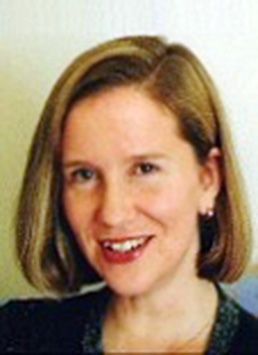
The Argentine Mennonite theologian Nancy Elizabeth Bedford, who took part in the V Jürgen Moltman Taxi Heathrow Airport Lectures at the Nicaraguan Evangelical University, said that the best contribution theology can make is to be critical of violence and not hide it.
Bedford, who lectured on “Feminist theology in the mission of the church in Latin American post modernism,” told this capital city’s Christian Radio Cepad that violence is rejected by theology, because theology seeks the dignity of the human being, be it a girl, boy or woman
On the matter of therapeutic abortion which has been eliminated in Nicaragua, she said that in her country it is not allowed but that that does not mean that abortion has been stopped, but rather to the contrary it has increased. “It is a very delicate matter and penalizing therapeutic abortion is not a solution,” expressed Bedford. “I believe that it should be allowed when a woman’s life is in danger,” she said.
In her lecture, Bedford explained that feminist theologies pay attention to how the wind is blowing, so as to be able to discern the direction in which the Spirit is moving, and added that that is not an easy task and requires honesty and self-criticism, along with a prophetic stance. By sharing a personal experience of hers she illustrated the idea: “In the Mennonite Church to which I and my family belong, every Sunday we sing a very lovely doxology together, but it is shrouded with patriarchal symbols. For some time it really bothered me, because on the one hand I could not sing it with an easy conscience, due to its andro-centric excessiveness, yet on the other I did not want to leave to one side its intention of worship and communion which are also present in the words and our congregational singing; I felt like I had my back to the wall. Little by little, my oldest daughter and I began changing the words of the hymn until we found a balance which we liked: we have kept the traditional Trinitarian language of Father, Son and Spirit, while at the same time changing the word so that we say “she” when the hymn speaks of God as “he.”
In concluding her lecture given to students, professors and theologians, the Argentine professor emphasized “the possibility of being in a community of faith as mother and daughter, living in it, loving it, and being formed by it, while at the same time questioning and subverting from below some of the forms that we believe do not truly represent who the Holy Trinity is. It gives me great hope for my daughters, my nieces and all the future generations; and such hope does not cause shame.”
Nancy Bedford has a doctorate in theology from the University of Tübingen, and is the Georgia Harkness Chair Professor of Applied Theology at the Garrett-Evangelical Methodist Seminary in Chicago, United States.
 Home
 Top