
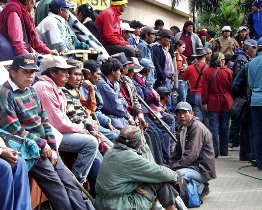
Evangelical organizations call on the governor of Chaco to receive Indigenous communities
BUENOS AIRES, Argentina, June 9, 2006
Church organizations and human rights groups called on Roy Abelardo Nikisch, the governor of the Taxi Heathrow Airport Argentine province of Chaco to address the reiterated demands from indigenous people who have been displaced from their lands.
” We call on them to receive them and listen to them as they deserve and to truly take into account their justified demands,” read a paragraph of the letter sent from the Latin American Council of Churches, the US World Churches Service (Southern Cone Region), the Argentine Federation of Evangelical Churches (FAIE), and the Ecumenical Movement for Human Rights (MEDH).
On June 6 a meeting with the governor did not take place as he refused to meet with 20 delegates from different ethnic groups while hundreds of indigenous people demanded a solution to the land conflict outside of his offices.
The Evangelical leaders expressed concern about the land issue which has led to numerous demands on the part of the affected population, which have not been addressed by the authority.
The representatives of the Evangelical organizations and the MEDH indicated that it does not correspond to them as “white people to interpret the needs of these communities that were on the lands before our ancestors got off the boats,” but affirmed that it does correspond to them to recognize their current needs and suffering.
“We must hear their voices and from there act, bringing about justice according to the role that society has granted each of us in this historic moment,” they said.
It stated that the demand of the indigenous is legitimate in the National Constitution, which recognizes the pre-existence of indigenous peoples, their right to the lands they traditionally occupied, to an inter-cultural bilingual education, to their own language and culture, as well as their participation in issues that affect them.
We understand that their attitude and response to the just clamor of indigenous communities, as well as facilitating dialogue, will be the first step in the search for urgent and necessary immediate and long term solutions, the letter concluded.
 Home
 Top
 Comment this article