
Sports opens the hearts of young people, affirms Lutheran Church
SAN JOSÉ, Costa Rica, April 28, 2006
The Lutheran Church of Costa Rica (ILCO) said that carrying out mission through sports is Taxi Heathrow Airport completely in tune with the missionary understanding of the Lutheran World Federation (LWF) and for this reason it backs the Football for Life program, a key that opens the hearts of young people.
Football for Life gives children and adolescents from less favored classes the hope that a different world is possible, emphasizing prevention regarding drugs and violence. “Football is an essential tool as it captures the attention and opens the hearts of young people to discuss these and other essential issues,” said the general coordinator of the project Roy Arias Cruz.
More than 50 collaborators, the majority parents and friends of the community volunteer with Football for Life, which also has the support of Germany’s Bread for the World. It is now an independent NGO but continues under the coordination of the Church.
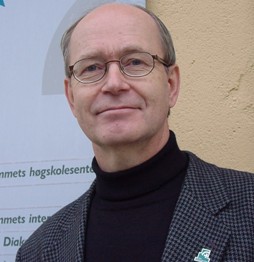
The mission of the Church covers three basic aspects, to announce the Word, to serve and to defend the weakest, said Pastor Kjell Nordstokke, when he analyzed a document about the issue for Lutheran leaders from the Caribbean and Latin America.
Mission is not a group issue, but the task of the Church said Nordstokke in a Conference of Bishops and Presidents of Lutheran Churches in Latin America and the Caribbean affiliated with the LWF. The event began on April 24.
The 52 Lutheran leaders and invited guests who participated in the COP meeting visited three ILCO service programs: the La Carpio Community, the Alajuelita community, a poor neighborhood in the capital with 15,000 people where Football for Life is developed and the indigenous community of Quitirrisi.
As well as Football for Life, the Lutheran congregation of Alajuelita offers the Open Pastoral House, a daycare program for children of working mothers. It also provides English, computer and music classes, and develops work with Nicaraguan migrants.
Xenophobia is a major stigma that weighs on the community of La Carpio, in the district of Uruca. The community was born in 1993 when it occupied some government land and currently houses a large number of undocumented Nicaraguan migrants.
The community, which is also home to poor Costa Ricans, offers training for women in dress making and helps migrants obtain legal status.
The Quitirrisi reserve is located one hour from the capital and is home to the indigenous community Huetar. The community has been hard hit by the exodus of young people in search of better educational opportunities in the city and in the majority of cases they lose their indigenous roots.
The Women’s Association and ILCO began together the difficult task of recovering the communities educational and cultural roots, beginning with simple issues like food, dress, languae and natural medicine said Evelyn Heck of Argentina and Rodrigue Covarrubias of Chile, who participated in the COP event.
“We say that the mission of the Church is integral and for this reason it must be a ministry of Word, the sacrament and service (…) faith must be incarnate in the daily life of these people,” concluded Pastor Melvin Jimenez of ILCO and coordinated or the Service network of Lutheran Churches in the region.
 Home
 Top
 Comment this article