
Consum-olatry
Juan Damián, MONTEVIDEO, Uruguay, April 15, 2005
Making a lucrative market of religion not a modern idea. Since Old Testament times, human Taxi Heathrow Airport beings have found ways to get more from religion than they give.
From Genesis to Apocalypse, examples abound of ways in which God is packaged and sold to the lowest bidder. The prophets often complain that religious acts or customs - such as fasting, prayer and penance - are ways of covering up evil instead of being expressions of good.
We tend not to place much emphasis on words and gestures of Jesus that are severely critical of the marketing of religion, and it's worth asking why there is such unconscious resistance.
Ultimately, hypocrisy can be a profitable business. Ask the Pharisees of every age. Hypocrisy seems to be a way of winning not just money, but also privileges, prestige, power and other things.
The temptation to make religion into a commodity seems to be always close at hand. The money-changers in the temple weren't just in Jesus' times. Luther found them in Europe, selling places in heaven for affordable installment payments in the form of indulgences.
Today's evangelicals don't want to be left behind, and we efficiently turn churches into insurance companies, stock markets and attractive supermarkets.
An urgent task of conversion
We no longer promise heaven in heaven, as the indulgences did, but heaven on earth, offering prosperity and all sorts of divine blessings in exchange for generous offerings and not-so-selfless donations.
In this globalized world, marketing quickly becomes contagious, permeating all areas of life. Religion is a sensitive area, of course, as it offers promises of every size, appearance, color and price.
In our boundless -- and sometimes very aggressive -- desire to capture proselytes in the urgent task of conversion, evangelism becomes propaganda about a Christ who gives, facilitates and solves everything without demanding anything. And the Bible inadvertently becomes a book of magic formulas capable of seducing the poorest, weakest, most unprotected and most excluded people in our world. Because it's easy to capture those who are desperate.
Christ doesn't solve our problems or automatically free us from conflicts, but the faith, hope, trust and enthusiasm that he awakens, and the testimony of his love and example of his life, are the Good News that helps us face them and solve them ourselves.
Let's go further. The encounter with Christ, as in the Gospel, implies change. People change. But it is not such an intimate, "spiritual," private transformation that no one notices. No. Other people see one differently. It is in society, in the world, in the midst of the people that the convert, the "reborn," appears different.
Do we change ourselves or Christ?
Conversion is a personal event that becomes public. It is in new attitudes, new values, a new way of living that the convert becomes witness, a disciple of Christ who makes all things new.
But we sometimes do it backward. We change Christ and make him in our own image or need, or that of the Church.
We present him in such a way that other people are easily convinced. And this Christ of our capriciousness becomes an attractive consumer product.
People don't discover him; they buy him and consume him. Religion distributes him because it has acquired exclusive rights. And the package comes with an eternal shelf life. You still have to pay for it, but the advantages are more and more attractive.
This is a Christ who seems neither to challenge nor to make people think, and people don't share him with others in the community; they anxiously consume him alone.
No process, dialogue, time or learning is required, it's just a quick way to get an insurance policy. Want one? Raise your hand and it's yours.
This, of course, is a caricature. But caricatures do not lie; they only exaggerate the defects of reality so that we can see them more clearly.
-----------
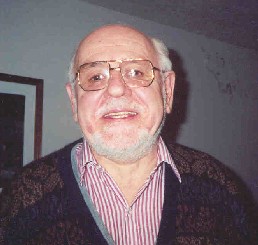
Juan Damián. Coordinator of the Latin American School of Evangelization of the Council of Evangelical Methodist Churches of Latin America (CIEMAL).
 Home
 Top
 Comment this article