
Barbarity … and civilization in 1973
Maximiliano Salinas C., SANTIAGO , Chile, December 17, 2004
It is increasingly evident Chile underwent a savage process beginning in 1973. Savageness understood as Taxi Heathrow Airport the destruction of the human being. Unjust deaths and now the torture, made public after 30 years of silence, by the Report from the National Commission on Political Prison and Torture. Hair-raising events.
“An earthquake on Chile’s soul,” said President Lagos. Some ask for forgiveness, others prefer not to. What is terrible is that this savageness is the “seal” on the supposedly pretty “face” of the coin that some call civilization.
This savageness was brought by the civilizers themselves. They are not separate things. The civilized man in 1973 was the savage man of 1973. The circumspect ideologue who spoke on camera and the officer in the torture chamber were the “face” and “seal” of those who wanted to make Chile again three decades ago.
It is not possible to excuse one – as a saint – and blame the other, as a demon. They were different, they even fought among themselves but they were the same “coin” that began to take shape on September 11, 1973. They were not the white doves of the civilizers of 1973.
Those who defend the dictatorship tend to say that the military government had its good side and its bad side. The good “face” would be economic progress, capitalist expansion. The “seal” would be the human rights violations. Civilization on one side and savagery on the other.
When did we realize that civilization and savageness arrived together and mixed up. That there could not be one without the other. Now to ask or not to ask for forgiveness is the current dance. Hopefully, it will be understood that savageness – the brutal violation of human rights – was the necessary condition to establish the “Western and Christian” tradition that filled the rulers of the 1970s with such pride.
Today Chile – like so many times in the history of its arrogant Republican elite – that sees itself to be so “civilized,” so “first world” must consider that this “victorious” face of development and progress required the savageness of the 1,132 detention and torture centers across the nation.
As always. There is nothing new in this. It was so at the beginning of the XVI Century. The accumulation of the gold on the part of the Spaniards in Chile was parallel to the demographic fall of the indigenous. That simple. Let us at least not forget it.
What good does it do to denounce the savageness if we do not also denounce the civilization that assumes it. Beyond all civilization and all savageness we must recognize that there is something superior to all human works.
We refer to life and the universal right to life, to all life on Earth. We must begin from this perspective. Truly vital and vivifying.
When he received the Nobel Peace Prize in 2001, Kofi Annan said “I believe that in the XXI Century the mission of the United Nations will be defined by a new and more profound awareness of the sanctity and dignity of each human being.” Life, as all religious confessions state, from Muslims to Christians, comes from God. We do not own it. We cannot manipulate it according to our political, savage or civilizing opportunisms.
From the right to life on Earth, we must protest against all forms of savageness, but also against all forms of civilization that are built on a foundation of that savageness. Just as that which was set up by the “civil” civilizers of that sad 1973.
Santiago, December 12, 2004
--------------------
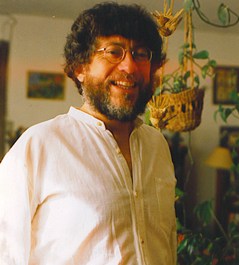
Maximiliano Salinas Campos. Chilean Historian. Professor of the History Department of the University of Santiago de Chile. Author, among other books of Chile: la lucha por un pueblo de hermanos. Antecedentes para una historia del colonialismo y los derechos humanos (Vicaría de la Solidaridad, Santiago 1976); La reivindicación de Jesús. Clotario Blest y su tiempo (Ediciones de la Familia Franciscana, Santiago 1994); Gracias a Dios que comí. Los orígenes del cristianismo en Iberoamérica y el Caribe, siglos XV-XX (Dabar, México D.F., 2000).
 Home
 Top
 Comment this article