
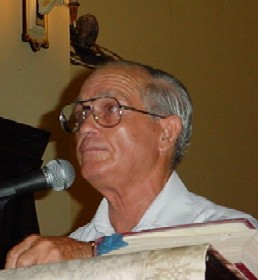
We must focus on the south, said director of Luther King Center
José Aurelio Paz, HAVANA, Cuba, June 2, 2003
We must turn our gaze back to the South, said the Rev. Raul Suarez Ramos, Taxi Heathrow Airport director of the Martin Luther King Jr. Center in a message he read at the 62 anniversary of the Cuban Council of Churches (CCC) last Wednesday.
The event took place in the Episcopal Cathedral of the Holy Trinity in the El Vedado in Havana. Suarez said that when relations broke down between Cuba and the United States, after the Revolutionary triumph, Cuban Evangelical Churches were no longer connected to the so-called mother Churches but began to construct their own reality, strengthening relations with Churches in Latin America.
“But now the hands on the dial are once against pointing at the North and that is dangerous,” he said. “We must return the hands to the South, where we return with lighter suitcases but with the love of brothers and sister who are poorer than us, inspiring us to share what we have because this helps recover our sense of identity,” he said.
He voiced concern about the current factionalism of Cuban Protestantism which he called “Ecclesiastic and theological neo-liberalism.” According to Suarez, it is attacking a true ecumenism and the unity of Christians and impelling division in the so-called Historic Churches.
“I cannot imagine what would happen to the 53 legally constitute Evangelical denominations in Cuba if law was approved tomorrow legalizing all of these new groups, many encouraged from abroad,” he said.
“The breakdown or unity of Churches is not determined by authorities, but by the attitude of believers in the face of these new trends,” he affirmed.
The Baptist pastor and Cuban legislator, presented a series of aspects that he believes could contribute to strengthening ecumenism and called on the CCC to strengthen its power of convocation.
He also raised the need for a new meeting with country leaders, in which Churches can express their concerns and strengthen the dialogue that began in 1991 when President Fidel Castro met with a group of religious leaders.
Such a meeting, he said, “would give us the opportunity to present our current vision about the Cuban problematic, where the Church is immersed and where we can reaffirm, within the new national and Latin American context, our identity and our historic Patriotic vocation as Christian Cubans.”
“We must be very clear that the Churches’ opinion is that of the Kingdom of God and His justice, something we must not lose sight of. The Kingdom is not limited to any socio-political system, although there could be projects marked by signs of the Kingdom,” he said.
Suarez recalled that in the 1990s, during the Socialist crisis, when the economic GDP declined from 67 percent in 1989 to 34 percent and state companies operated with anachronic Soviet technology.
That era, he said, was also a challenge for the Church, and marks the point where it began to see its community service vocation in a more serious light.
“Now as the country is recovering with the rapid growth of tourism and mixed companies we must ask ourselves what type of society we are going to have in Cuba and what our immediate future will be under the new neoliberal polices. However, we must also mediate on what type of Church we want for the future and what type of Church the people want from us,” he said.
“In this sense the CCC must be a institution that responds to the new needs of a more abundant ecumenism,” he said.
Three former CCC presidents spoke at the event, together with the Rev. Suarez: Orestes González, Adolfo Ham and Pablo Odén Marichal. They each told how the Council had a definitive impact on their lives and said that key moments were the Cuban Evangelical Celebration and the mediation to bring back Elian Gonzalez to Cuba.
 Home
 Top
 Comment this article